Industry
Fashion
Tools
Indesign
Illustrator
Photoshop
SketchUp
Photography
Year
2018-2019
Reimagining Rains’ In‑Store Experience
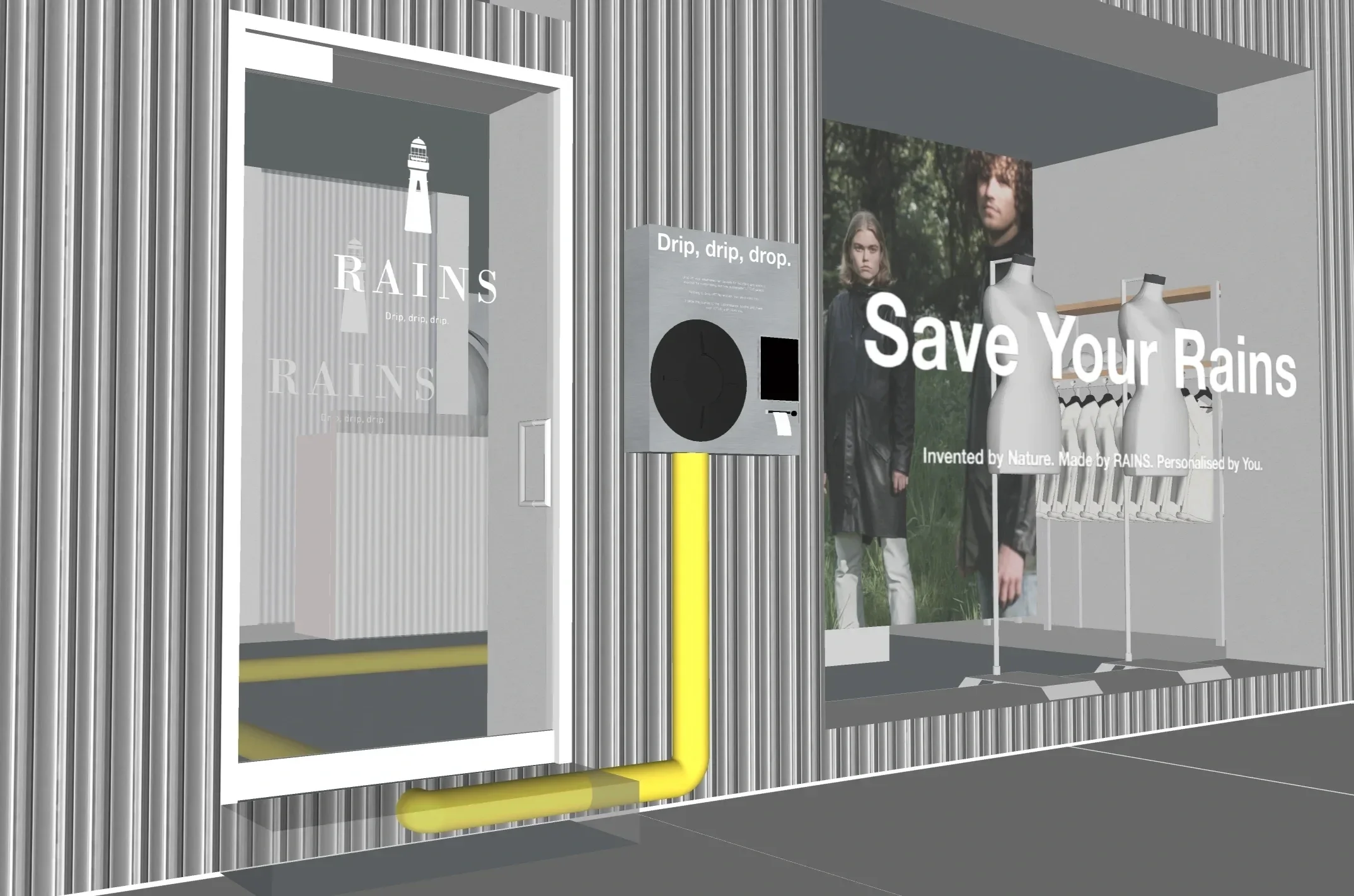
In today’s digital‑first world, shoppers seek more than just products, they seek experiences. For my graduation project at the Amsterdam Fashion Institute, I reimagined Rains’ retail experience to bridge the gap between functional outerwear and meaningful brand connection.
The Challenge
Rains, a Scandinavian inspired outerwear brand known for its minimalist waterproof designs, needed more than traditional stores; it needed a physical environment that reflects its urban, sustainable ethos and emotionally engages its audience. The launch of the LOTUS product line presented an opportunity to rethink how retail could strengthen Rains’ USP and foster deeper brand loyalty. The Solution
My Role & Responsibilities
I led this project independently as my graduation work, integrating strategy, design, and brand storytelling to create a cohesive retail ecosystem. My contributions included:
Audience research & insights
Brand positioning and strategy
Retail concept development
Brand book creation
Photoshoot
3D store model visualisation
Communication strategy for launch and long‑term engagement
This project combines branding, retail design, and strategic communication to show how physical retail can deepen customer experience.
Research & Insights
Before designing, I explored two fundamental questions:
Who is Rains’ audience, and what do they value most?
What does a retail experience look like today when consumers want connection, transparency, and purpose?
Key insights included:
Consumers respond strongly to authentic sustainability storytelling.
Physical spaces should do more than display products, they must invite exploration and participation.
Retail environments that educate increase emotional connection and loyalty.
These insights shaped every decision in the concept that follows.
The Solution
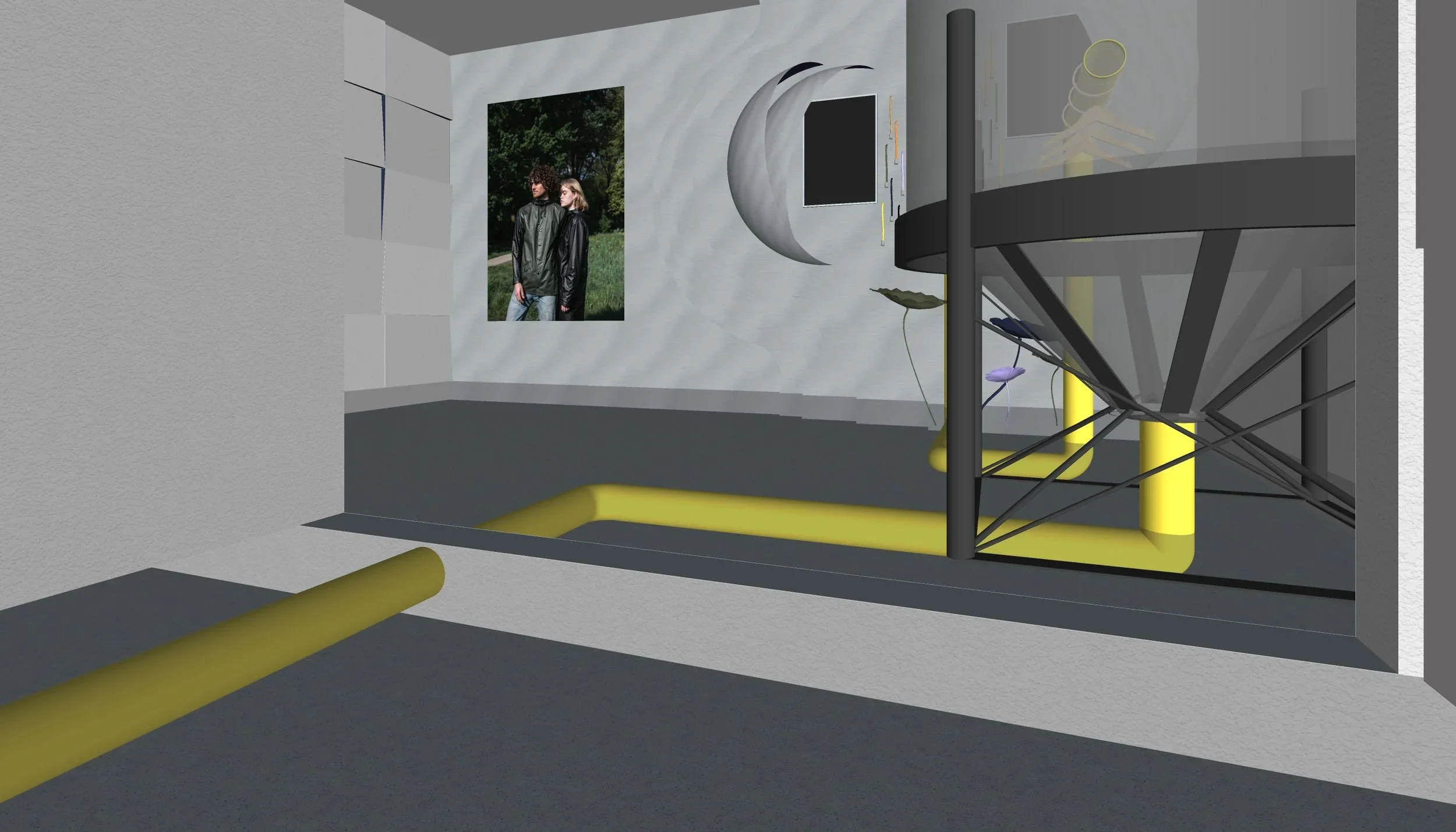
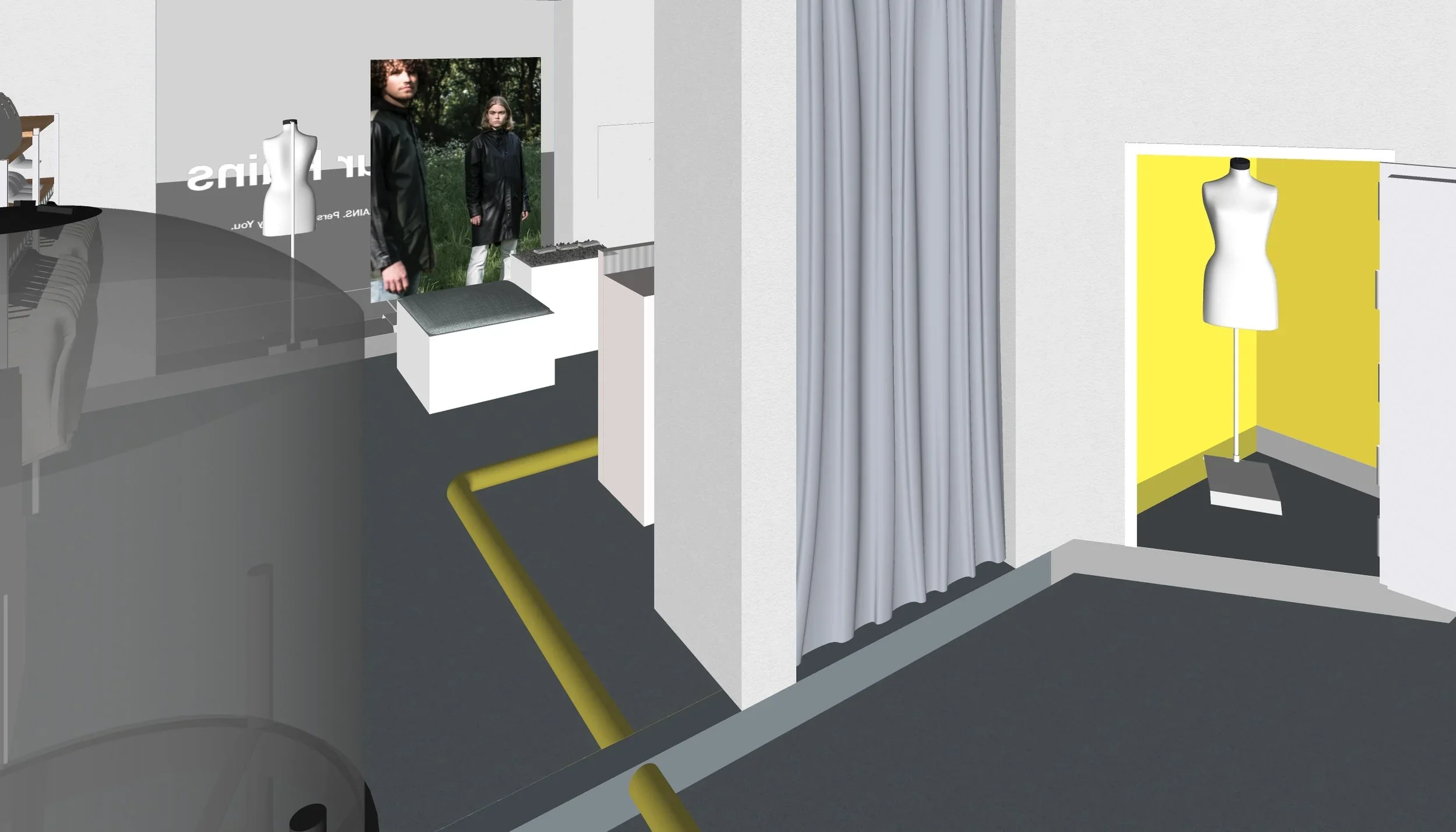
I designed a new retail experience that elevates Rains stores into immersive brand destinations where product and story coexist meaningfully. This concept blends digital technology, hands‑on interaction, and sustainable narratives to help customers feel involved in the lifecycle of the product, from material sourcing to customisation opportunities.
Key Concept Features
Interactive lifecycle zones: Visitors explore how materials are sourced, recycled, and manufactured.
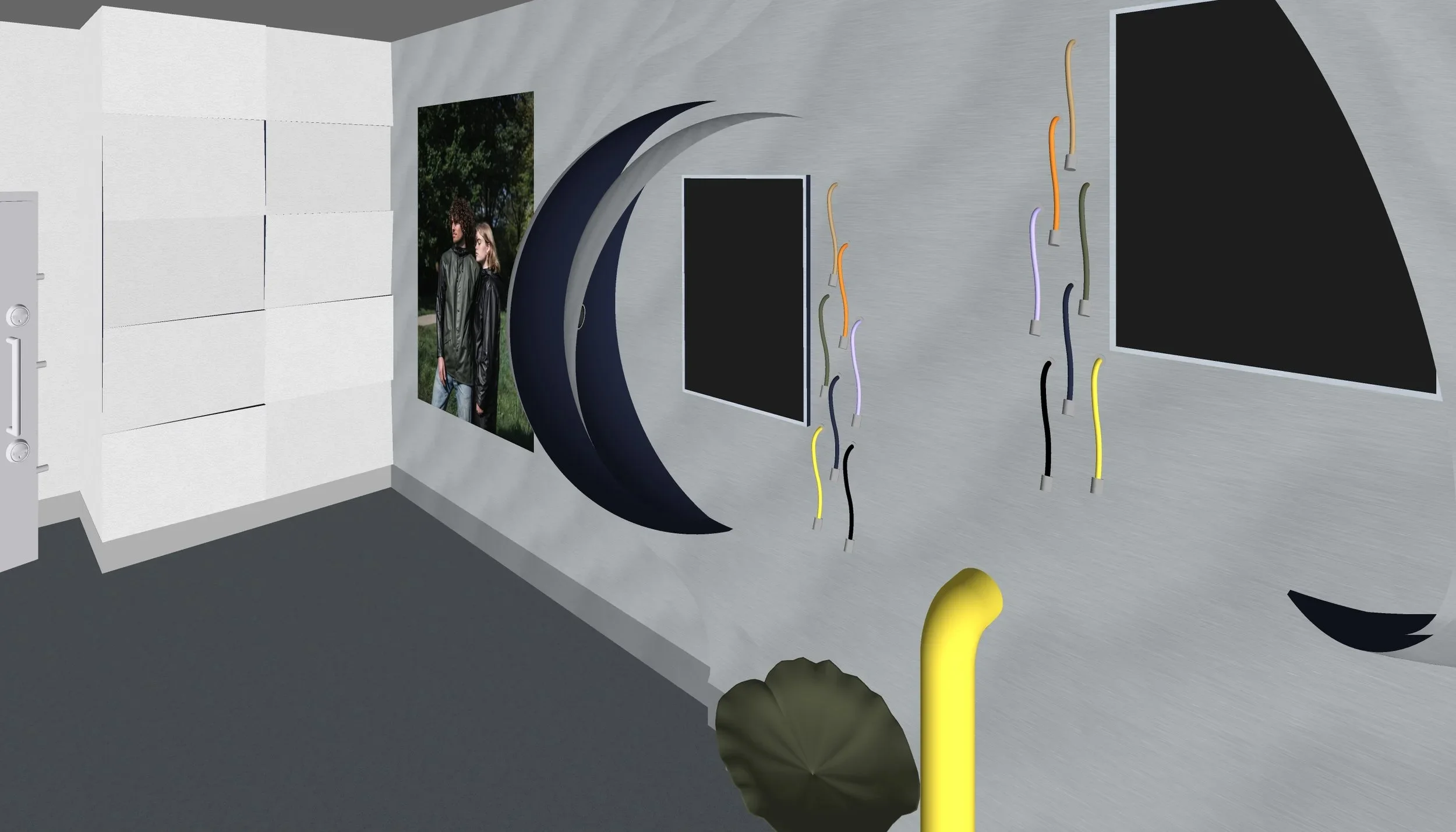
Customisation stations: Customers can personalise their LOTUS pieces in store.
Digital storytelling moments: Screens and AR stations share product stories and brand values.
Sustainable material showcases: Tactile displays illustrate Rains’ eco‑materials and processes.
Brandbook Highlights *
* I’ve learned a lot since graduation, including that contrast matters. This text is playing hard-to-get. Call it a reflective pause on why design shouldn’t make you squint.
the experience
the experience

This concept transforms retail into a story journey: from welcoming customers into the brand’s world, through exploration and discovery, to personal expression and ownership. Interactive and physical elements work together to create meaningful touchpoints that align with how people shop today.

Communication Strategy Highlights
To activate this new retail identity, I developed a communication flow that builds awareness and fosters lasting connection with Rains’ audience.
Campaign pillars:
📣 Teaser & Hype Stage: social storytelling leading up to launch
🤝 Influencer & Community Activation: aligning with sustainability advocates
📲 Digital & Social Engagement: content linking in‑store experience with broader climate values
This strategy was designed to work across Instagram, Facebook, web, and media partnerships to deepen reach and amplify authentic narratives.
Reflection & Takeaway
Reflections & What I Learned
This project taught me the importance of clarity in visual communication, both literally (legibility and contrast) and conceptually (clear flow from insight to solution). In hindsight, stronger quantitative validation through user testing could have further refined the concept’s flow and usability in real retail scenarios.
Moving forward, I would integrate early testing sessions and expand the digital‑physical interaction logic to ensure each touchpoint feels intuitive and meaningful.
Takeaways
A strong retail experience is strategic, not decorative.
Physical spaces must tell stories, not just display products.
Sustainability should be embodied, not just communicated in both the brand story and the physical design.
This case study reflects how thoughtful design (grounded in research and strategy) can elevate a brand’s presence and foster stronger customer relationships.